
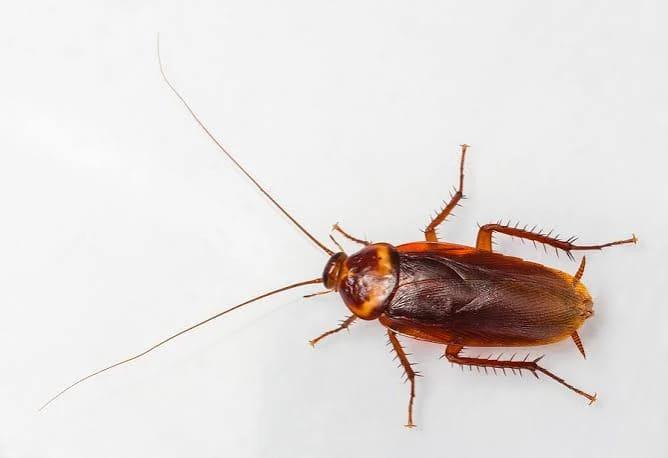
Cockroaches (order Blattodea) are among the most common household pests in South Africa, and among the most persistent. The two species seen most often in homes and businesses are the German cockroach, which thrives indoors year-round, and the American cockroach, which prefers warm, humid spaces like drains and basements.
Because cockroaches reproduce quickly and hide during the day, a small sighting usually points to a much larger population out of view.
Signs You Have a Cockroach Infestation
- Dark, pepper-like droppings along skirting boards, in cupboards and under appliances
- A persistent musty, oily odour in kitchens and bathrooms
- Egg cases (oothecae) in hidden, warm areas such as behind the fridge or stove
- Shed skins from nymphs as they grow
- Live roaches seen at night or when a light is switched on in the dark
Why Cockroaches Are a Health Risk
Cockroaches pick up bacteria from drains, bins and rotting food, then carry it across kitchen surfaces, crockery and food. Their droppings and shed skins are also a recognised trigger for allergies and asthma, particularly in children. A cockroach problem is as much a hygiene issue as a nuisance.
What Attracts Cockroaches
- Food residue on counters, stovetops and inside cupboards
- Standing water, leaking pipes and condensation
- Clutter and cardboard, which provide shelter and egg-laying sites
- Warmth from appliances such as fridges, stoves and geysers
How to Get Rid of Cockroaches Step by Step
- 01Identify hotspots — check behind and under appliances, inside cupboards, and around drains for droppings or egg cases
- 02Deep clean kitchens and bathrooms, including behind appliances and inside cupboard joints where crumbs collect
- 03Fix leaks and reduce standing water, since cockroaches can't survive long without a water source
- 04Seal cracks, gaps around pipes, and spaces under doors where roaches travel between units
- 05Apply a professional-grade gel bait or targeted treatment to active areas — this reaches roaches hiding in voids that sprays can't
- 06Schedule a follow-up inspection two to three weeks later to confirm the treatment has broken the breeding cycle
DIY vs Professional Cockroach Treatment
Store-bought sprays kill roaches on contact but rarely reach the egg cases and nests hidden inside wall voids, behind appliances and under flooring. Professional treatment uses targeted baiting and residual products that roaches carry back to the colony, breaking the infestation at its source rather than just reducing what's visible.
Frequently Asked Questions
What is the fastest way to get rid of cockroaches?
A combination of a deep clean to remove food and water sources, sealing entry points, and a professional gel bait or targeted treatment works fastest. Sprays alone give quick but short-lived results because they don't reach roaches hiding in voids and egg cases.
Are cockroaches dangerous?
Cockroaches don't typically bite, but they spread bacteria picked up from drains and waste onto food and surfaces, and their droppings and shed skins can trigger allergies and asthma. They're considered a genuine health risk, not just an unpleasant sighting.
How often should I have cockroach treatment done?
For an active infestation, an initial treatment plus a follow-up two to three weeks later is standard. For ongoing prevention in restaurants, kitchens or older buildings, a quarterly maintenance treatment is a common precaution.